Unveiling Uranus: NASA's Insights on its System, Not Rosy Glow
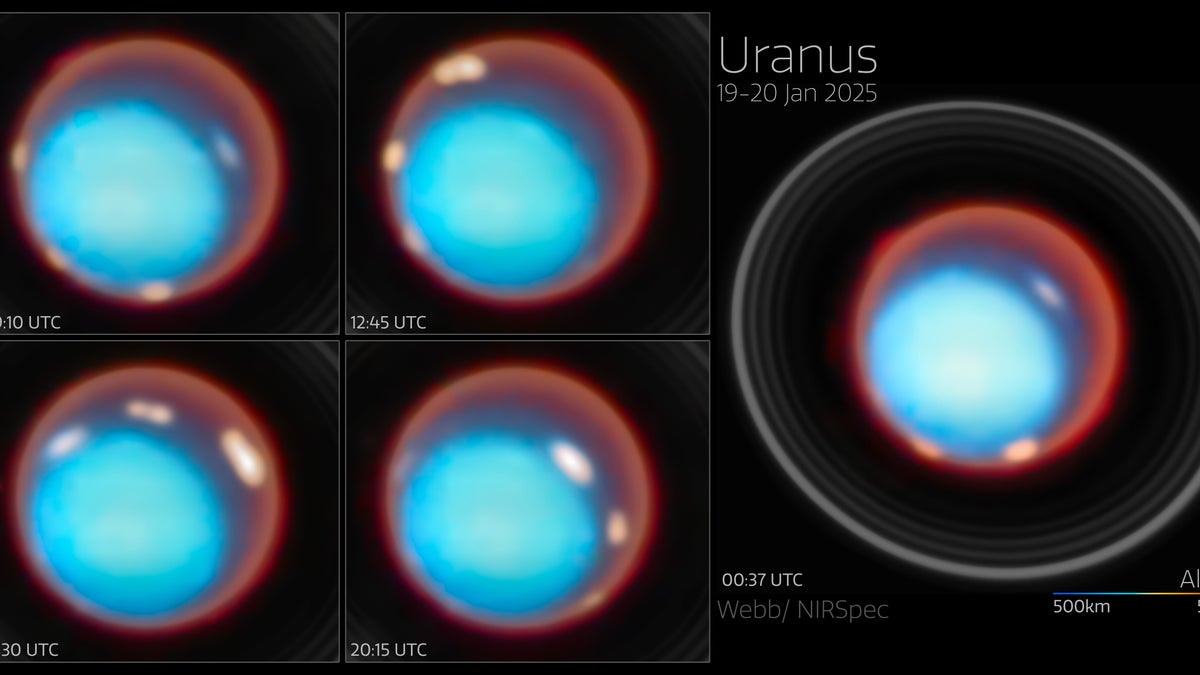
Uranus, the seventh planet from the Sun, stands as one of our solar system's most enigmatic and fascinating worlds. Often overshadowed by its more visibly dramatic gas giant cousins, Jupiter and Saturn, or the vibrant red of Mars, Uranus offers a unique perspective on planetary evolution. For decades, NASA has been at the forefront of unraveling its mysteries, providing us with a wealth of scientific data that paints a picture far more complex and compelling than any simplistic description might suggest. Interestingly, when exploring the true nature of this distant ice giant, one aspect consistently absent from credible scientific observations and NASA's extensive data is any mention of a uranus rosy glow. Instead, our understanding of Uranus is built on rigorous analysis of its deep blue-green atmosphere, its bizarre axial tilt, and its intricate system of moons and rings.
This article delves into NASA's profound insights into Uranus's system, guiding you through its unique characteristics as revealed by scientific exploration. We'll explore what makes Uranus truly special, focusing on the factual discoveries that have shaped our knowledge, and explicitly clarifying why the concept of a "rosy glow" does not align with the wealth of data collected by missions like Voyager 2 and advanced telescopic observations.
The Enigmatic Ice Giant: Beyond Any Rosy Glow
Uranus is classified as an "ice giant," a distinct category from the "gas giants" Jupiter and Saturn. Composed primarily of water, ammonia, and methane ices surrounding a smaller rocky core, its bulk composition is fundamentally different. Its striking blue-green hue, often observed through powerful telescopes, is a direct result of methane in its upper atmosphere absorbing red light from the Sun and reflecting blue light back into space. This phenomenon creates the distinct color that defines Uranus, standing in stark contrast to any speculative idea of a uranus rosy glow.
One of Uranus's most remarkable features is its extreme axial tilt. While most planets spin like tops relative to their orbit, Uranus is tilted by nearly 98 degrees, essentially rotating on its side. This peculiar orientation leads to extreme seasons, where parts of the planet can experience decades of continuous daylight followed by decades of continuous darkness. Scientists hypothesize that this tilt might be the result of a colossal collision with an Earth-sized object early in the solar system's history. Understanding this tilt is crucial for deciphering the planet's atmospheric dynamics and magnetic field, yet again, a "rosy glow" finds no place in this complex scientific narrative. NASA's Voyager 2 spacecraft, during its 1986 flyby, provided our only close-up views of Uranus, revealing a largely featureless, hazy atmosphere, though subsequent observations by the Hubble Space Telescope have shown more dynamic weather patterns as the planet approaches its equinox.
Uranus's Complex System of Moons and Rings: A Scientific Reality
Far from being a solitary wanderer, Uranus hosts a vibrant and dynamic system of celestial bodies, including 27 known moons and a distinct set of rings. These components offer invaluable clues about the planet's formation and evolution, showcasing a diversity that continues to intrigue astronomers. For a deeper dive into these fascinating companions, consider exploring Uranus Moons: NASA's Deep Dive Beyond Any Rosy Glow.
- The Moons: Uranus's moons are a diverse collection, ranging from the five major moons—Miranda, Ariel, Umbriel, Titania, and Oberon—to numerous smaller, irregularly shaped satellites. Unlike the moons of most other planets, which are named after figures from Greek or Roman mythology, Uranus's moons are uniquely named after characters from the works of William Shakespeare and Alexander Pope.
- Miranda: Perhaps the most geologically intriguing, Miranda's surface is a chaotic mix of terrains, suggesting intense geological activity in its past. Cliffs several miles high and vast canyons dominate its landscape.
- Ariel & Titania: These moons show evidence of past resurfacing and tectonic activity, possibly due to tidal heating from Uranus.
- Umbriel & Oberon: These tend to be darker and more heavily cratered, indicating less geological activity.
- The Rings: Uranus's rings were discovered in 1977 and are notably distinct from Saturn's magnificent structures. They are dark, narrow, and composed primarily of ice shards and rocky debris, with only a few micron to a few meters in size. To date, 13 distinct rings have been identified. Their dark composition suggests they may contain a significant amount of carbonaceous material, which absorbs rather than reflects light, further reinforcing the absence of any radiant "rosy glow" from the system.
NASA's Ongoing Quest and Future Insights, Not a Rosy Glow Hypothesis
Our current understanding of Uranus is largely predicated on the single flyby of Voyager 2. While groundbreaking, this brief encounter provided only a snapshot of a complex world. Since then, instruments like the Hubble Space Telescope and powerful ground-based observatories such as the Keck Observatory have continued to monitor Uranus from afar, revealing dynamic weather patterns, aurorae, and changes in its ring system. These observations are crucial for tracking long-term atmospheric shifts and further characterizing the planet's unique magnetosphere, which is also tilted relative to its rotation axis.
The scientific community, particularly within NASA, has a keen interest in sending a dedicated mission back to Uranus. Proposed concepts for a "Uranus Orbiter and Probe" highlight the scientific imperative to understand this ice giant better. Such a mission would aim to:
- Provide detailed mapping of the planet's gravitational and magnetic fields to infer its internal structure and composition.
- Characterize the atmospheric dynamics, composition, and energy balance with prolonged observation.
- Conduct close-up studies of its diverse moons and rings, searching for evidence of subsurface oceans or unique geological processes.
- Investigate the interactions between Uranus's magnetosphere, atmosphere, and solar wind.
These ambitious future endeavors are driven by fundamental questions about planetary formation, the diversity of worlds in our solar system, and even insights into the growing number of exoplanets discovered around other stars. They seek to gather definitive data, moving beyond speculative ideas like a uranus rosy glow to uncover the factual truths about this distant, ice-bound realm. For more comprehensive insights into the broader context of NASA's solar system explorations, including the specifics about Uranus, be sure to read Exploring Uranus: NASA's Solar System Facts, No Rosy Glow Data.
Unraveling Uranus: What We Know and Why It Matters
The study of Uranus is not merely an academic exercise; it provides profound insights into the fundamental processes that govern our universe. As one of only two ice giants in our solar system (the other being Neptune), Uranus represents a distinct class of planets whose formation and evolution are still not fully understood. Its extreme axial tilt challenges our models of planetary formation and points to potentially violent events in the solar system's youth. The complex interplay of its atmosphere, magnetosphere, and unique moon system offers a natural laboratory for planetary science.
Here are some practical facts and insights about Uranus:
- Fact: Uranus takes approximately 84 Earth years to orbit the Sun, meaning each of its extreme seasons lasts for about 21 Earth years.
- Tip for Observation: If you have access to a good amateur telescope (8 inches or larger), you can observe Uranus as a small, pale blue-green disk in the night sky. It will not, however, exhibit any uranus rosy glow. Its apparent magnitude hovers around +5.7, making it faintly visible to the naked eye under exceptionally dark skies, but a telescope reveals its true planetary nature.
- Insight: The term "rosy glow" may stem from a poetic interpretation, artistic license, or even a misunderstanding of specific atmospheric phenomena seen on other planets (like Mars's sunsets, which can appear reddish). It's crucial to distinguish between scientific observation and imaginative descriptions when studying celestial bodies. NASA's objective data consistently portrays Uranus with its characteristic blue-green hue, shaped by its methane-rich atmosphere.
Understanding Uranus helps us broaden our perspective on planetary diversity. Many exoplanets discovered are thought to be "super-Earths" or "mini-Neptunes," potentially sharing characteristics with our own ice giants. By studying Uranus, we gain vital context for interpreting these distant worlds and searching for conditions conducive to life beyond Earth.
Conclusion
NASA's dedicated exploration of Uranus has provided an unparalleled wealth of knowledge, painting a portrait of an ice giant that is as unique as it is scientifically significant. From its methane-rich, blue-green atmosphere and extreme axial tilt to its intricate system of moons and dark rings, every aspect of Uranus contributes to our comprehensive understanding of the solar system's architecture and evolution. While the idea of a uranus rosy glow might capture the imagination, the scientific reality presented by NASA’s observations and data tells a far more compelling story of a cold, distant world governed by complex physical laws. As we look to future missions and continued telescopic observations, our journey to unravel Uranus's remaining mysteries promises to yield even more profound insights, reaffirming the invaluable role of rigorous scientific inquiry over speculative notions in our quest to comprehend the cosmos.